Manicotti and Cannelloni Difference Explained: Shape, Origins, and How to Use Them
Italian cuisine has a beautiful way of turning simple ingredients into dishes full of comfort and character. Among its many pasta varieties, manicotti and cannelloni often cause confusion, even among food lovers. At first glance, they look nearly identical—large tubes stuffed with cheese, meat, or vegetables and baked in sauce. But the manicotti and cannelloni difference goes deeper than appearance. Let’s break it down clearly, deliciously, and without the culinary snobbery.
Understanding Stuffed Pasta in Italian Cuisine
Stuffed pasta has been part of Italian cooking for centuries, especially in regions where baking pasta dishes is a tradition. These meals are often reserved for family gatherings, holidays, and Sunday dinners.
Both manicotti and cannelloni fall under the category of baked stuffed pasta, usually layered with tomato sauce, béchamel, ricotta cheese, and sometimes spinach or ground meat. While they share similarities, their background and preparation set them apart.
Fresh Pasta vs Dried Pasta Tubes
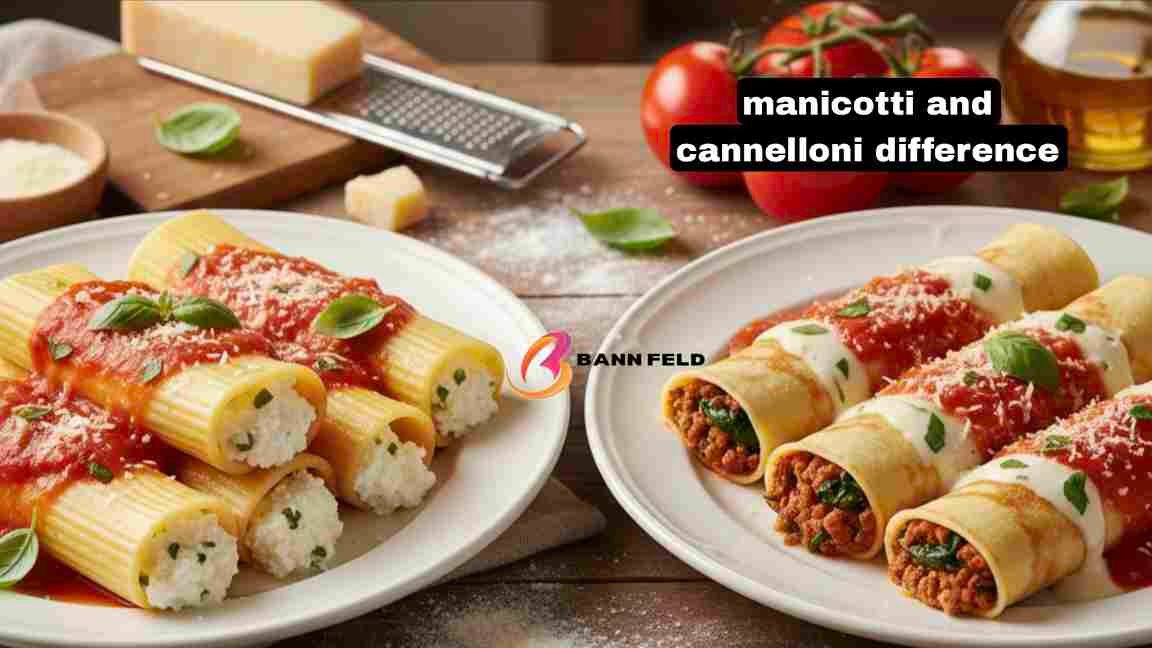
One key distinction lies in how the pasta itself is made. Cannelloni traditionally uses fresh pasta sheets rolled into tubes, while manicotti is commonly made from dried pasta tubes. This difference affects texture, cooking method, and even how fillings are added.
What Is Manicotti?
Manicotti is most commonly associated with Italian-American cuisine. The word “manicotti” means “little sleeves” in Italian, which perfectly describes its ridged, tube-like shape.
Manicotti pasta is usually sold dried and pre-formed. The tubes are larger, with ridges on the outside that help sauce cling better during baking. Because the pasta is firm when dry, it is often boiled briefly before stuffing, though some modern recipes skip this step and rely on extra sauce to soften it in the oven.
Common Manicotti Fillings
Manicotti fillings are rich and comforting. Ricotta cheese is the star, often mixed with mozzarella, Parmesan, eggs, and herbs. Some variations include ground beef, Italian sausage, or spinach. This style reflects hearty Italian-American cooking, where generous portions and bold flavors are celebrated.
What Is Cannelloni?
Cannelloni has its roots firmly planted in traditional Italian cuisine. The name translates to “large reeds,” referring to the smooth, cylindrical shape of the pasta.
Instead of dried tubes, cannelloni is usually made by rolling fresh pasta sheets around the filling. This means the pasta is softer and more delicate once baked. Because the pasta is fresh, there’s no need to pre-boil it before assembling the dish.
Traditional Cannelloni Fillings
Classic Italian fillings for cannelloni often include ricotta and spinach, minced veal, or slow-cooked meat ragù. Béchamel sauce is commonly used alongside tomato sauce, giving the dish a silky, layered texture that feels lighter than manicotti, despite being just as satisfying.
Key Differences Between Manicotti and Cannelloni
Although they end up looking similar on the plate, the manicotti and cannelloni difference comes down to three main factors: pasta type, texture, and culinary tradition.
Manicotti uses dried, ridged tubes that are sturdy and slightly chewy after baking. Cannelloni relies on fresh pasta, which becomes tender and almost melt-in-your-mouth. Manicotti is easier to find in grocery stores, especially outside Italy, while cannelloni often requires fresh pasta sheets or specialty products.
Another important distinction is cultural. Manicotti is a staple of Italian-American kitchens, whereas cannelloni remains closer to its Italian roots. This doesn’t make one better than the other—it simply means they shine in different ways.
Which One Should You Choose?
If you want a rustic, hearty baked pasta with bold flavors, manicotti is your go-to. If you’re aiming for a more traditional Italian feel with delicate textures, cannelloni is the better choice. Understanding the manicotti and cannelloni difference helps you pick the right pasta for your recipe and occasion.
Cooking Tips for Perfect Results
No matter which pasta you choose, technique matters. Overfilling can cause splitting, while too little sauce can leave the pasta dry. Always cover stuffed pasta generously with sauce before baking to ensure even cooking.
Using a piping bag or spoon makes filling easier and less messy. Let the dish rest for a few minutes after baking—this helps the filling set and makes serving cleaner.
FAQ’s About manicotti and cannelloni difference
Are manicotti and cannelloni the same thing?
No. While similar, they differ in pasta type, texture, and culinary tradition.
Can I substitute cannelloni for manicotti in a recipe?
Yes, but you may need to adjust cooking time and sauce quantity due to the pasta differences.
Which one is more authentic Italian?
Cannelloni is more traditional in Italy, while manicotti is more Italian-American.
Does the manicotti and cannelloni difference affect flavor?
Yes. The pasta texture influences how the sauce and filling taste together.
Conclusion
At the end of the day, both dishes offer comfort, flavor, and endless customization. The manicotti and cannelloni difference isn’t about right or wrong—it’s about style, texture, and tradition. Whether you prefer the sturdy, sauce-hugging tubes of manicotti or the tender elegance of cannelloni, understanding what sets them apart helps you cook with confidence and enjoy every bite a little more.